
DIY Wedding Stationery Checklist (what you actually need)
This post contains affiliate links. I may earn a small commission if you make a purchase through these links, at no extra cost to you.
DIY wedding stationery doesn’t have to be complicated.
With the right pieces — and nothing extra — you can create a beautiful, cohesive look without overspending or second-guessing every decision.
This checklist covers what you actually need, what’s optional, and what most couples can skip entirely.
The Essentials
These are the core pieces nearly every wedding requires.
Wedding Invitations
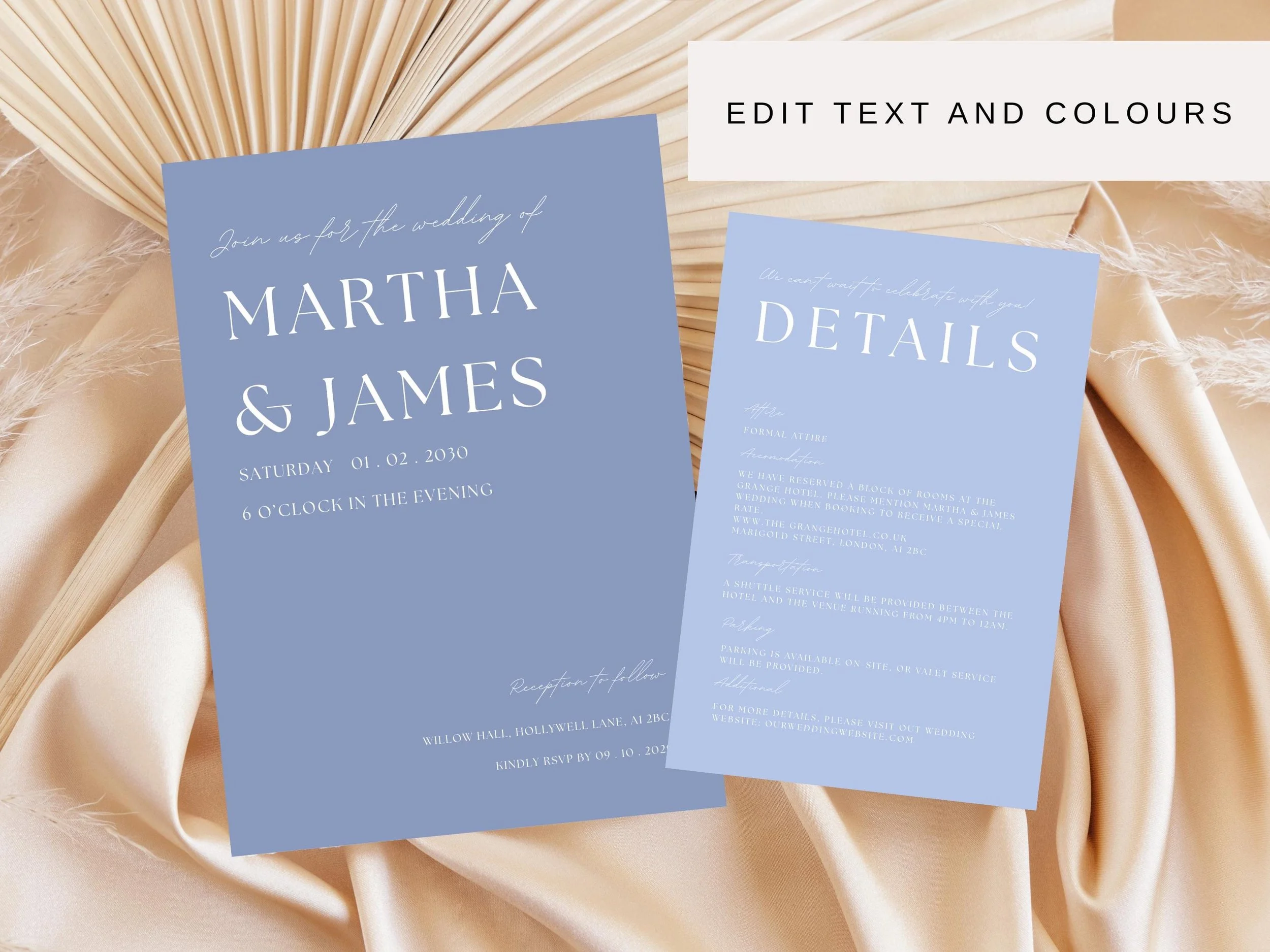
Your invitation suite can be as simple or detailed as you like. At a minimum, you’ll need:
An invitation card
RSVP information (printed or digital)
A details card, if you have additional information to share
Editable templates make this process much easier, especially if you’re printing at home or using an online print service.
Envelopes
You’ll need:
One outer envelope per invitation
RSVP envelopes, if you’re including paper replies
It’s always worth ordering a few extras for mistakes or last-minute guest additions.
RSVP System
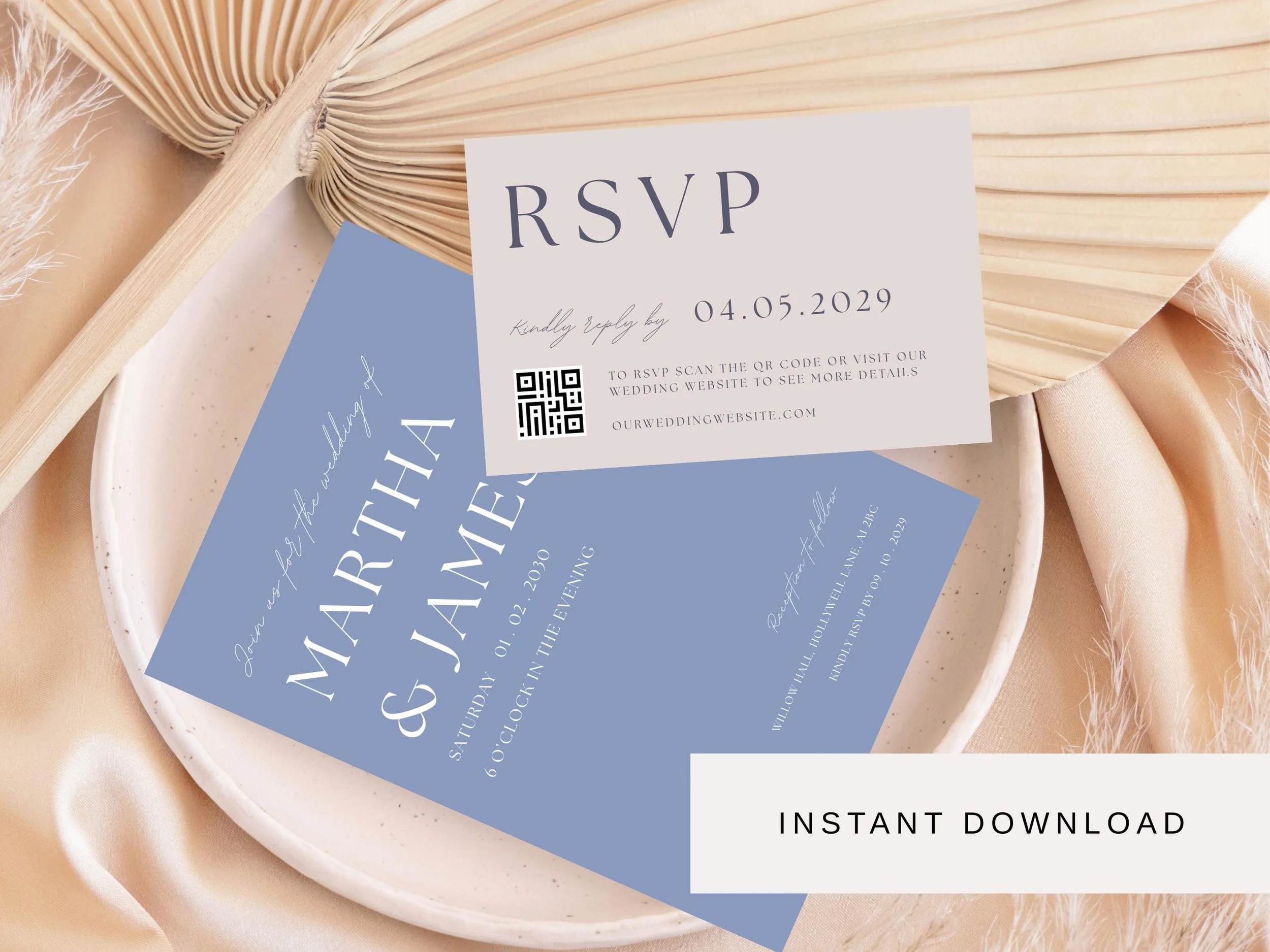
Choose the option that fits your planning style:
Printed RSVP cards
An online RSVP linked on your invitation
Many modern weddings now use digital RSVPs to simplify tracking and reduce printing costs.
Important, But Optional
These pieces are useful, but not required for every wedding.
Save the Dates

Consider these if:
Your wedding is more than six months away
Guests are traveling or planning around holidays
Digital save the dates are a popular, budget-friendly option.
Details Card
A details card helps keep your invitation clean while still sharing:
Travel or accommodation info
Dress code
Wedding website
Schedule notes
Addressing Options
Addressing envelopes can be done by:
Handwriting
Printed labels
Direct envelope printing
For larger guest lists, printing can save significant time.
Day-Of Stationery
Choose only what will genuinely be used.
Welcome Sign
Especially helpful for outdoor venues or shared locations, a welcome sign sets the tone and helps guests feel confident they’re in the right place.
Seating Chart or Escort Cards
You only need one:
Seating charts are simpler to print
Escort cards allow for last-minute changes
Table Numbers
Essential for guiding guests to their seats and keeping the reception flowing smoothly.
Programs
Programs are optional. Many couples now opt for:
A single ceremony sign
Or no program at all
Nice-to-Have Extras
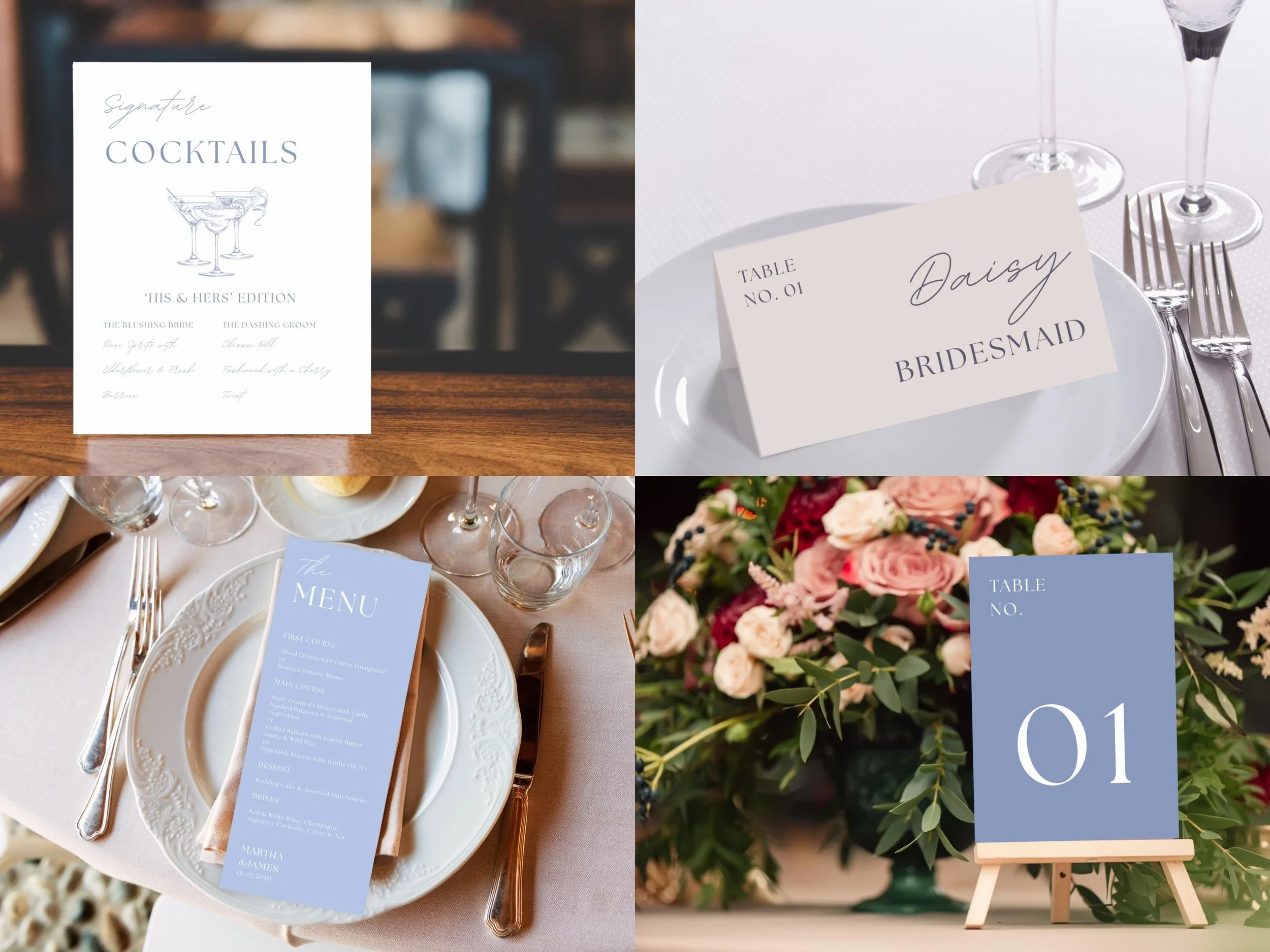
These add polish, but can be skipped without impacting the day:
Menu cards
Place cards
Favor tags
Thank-you notes (which can be sent later)
DIY Printing Basics
If you’re printing at home or ordering prints online, plan for:
Quality cardstock
A reliable printer or print service
A paper trimmer
Extra test prints
Always print a full test set before finalising.
What You Can Skip
To keep things simple and stress-free:
Multiple enclosure cards
Duplicate signage
Overly layered invitation suites
Minimal stationery is timeless and intentional.
The Simplest Stationery Setup
If you want the easiest approach, this is all you need:
Invitation
Envelope
RSVP system
Seating chart
Table numbers
Everything else is optional.
Make DIY Simple with Editable Templates
Editable wedding templates help you:
Customize quickly
Keep designs consistent
Avoid unnecessary costs
Print at home or professionally
Designed with simplicity in mind, they’re ideal for modern, DIY-friendly weddings.
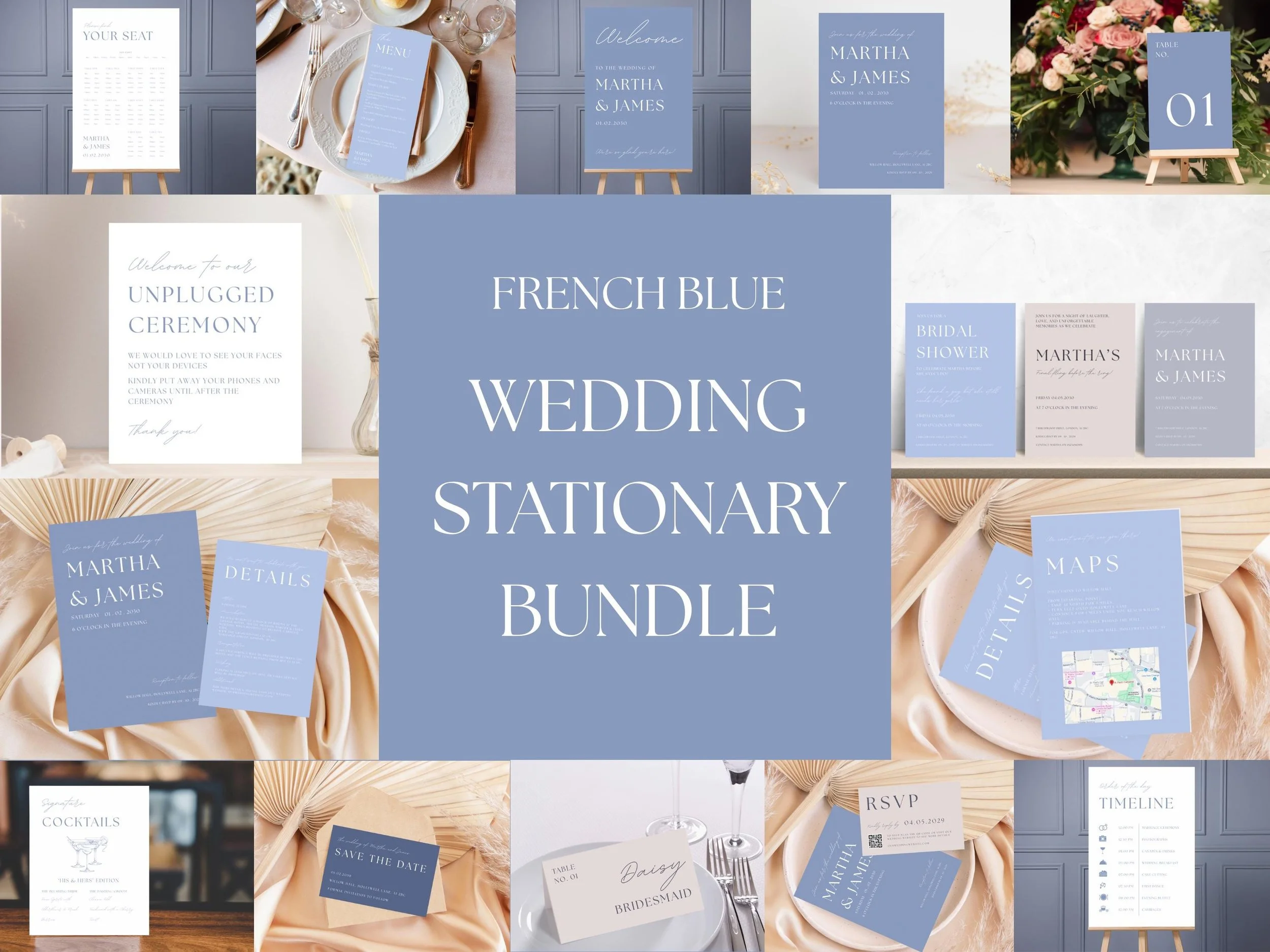
including:
Wedding Invitation Card Template, RSVP Cards, Seating Chart Template, Menu Cards, Thank You Cards, Place Cards, Details Cards, Personalized Cocktail Menu Sign & Welcome Sign
Final Thoughts
Focus on what supports your day — not what adds pressure.
Simple, well-designed stationery is more than enough.
Other posts you might like:
Your simple, step by step walkthrough to personalising your wedding stationery.